2020 Transportation GO Bond
On November 3, 2020, Bend voters passed Transportation Bond Measure 9-135. This bond measure will pay to build priority projects in every part of the city to Improve traffic flow and east-west connections and Improve neighborhood safety. Thank you voters!
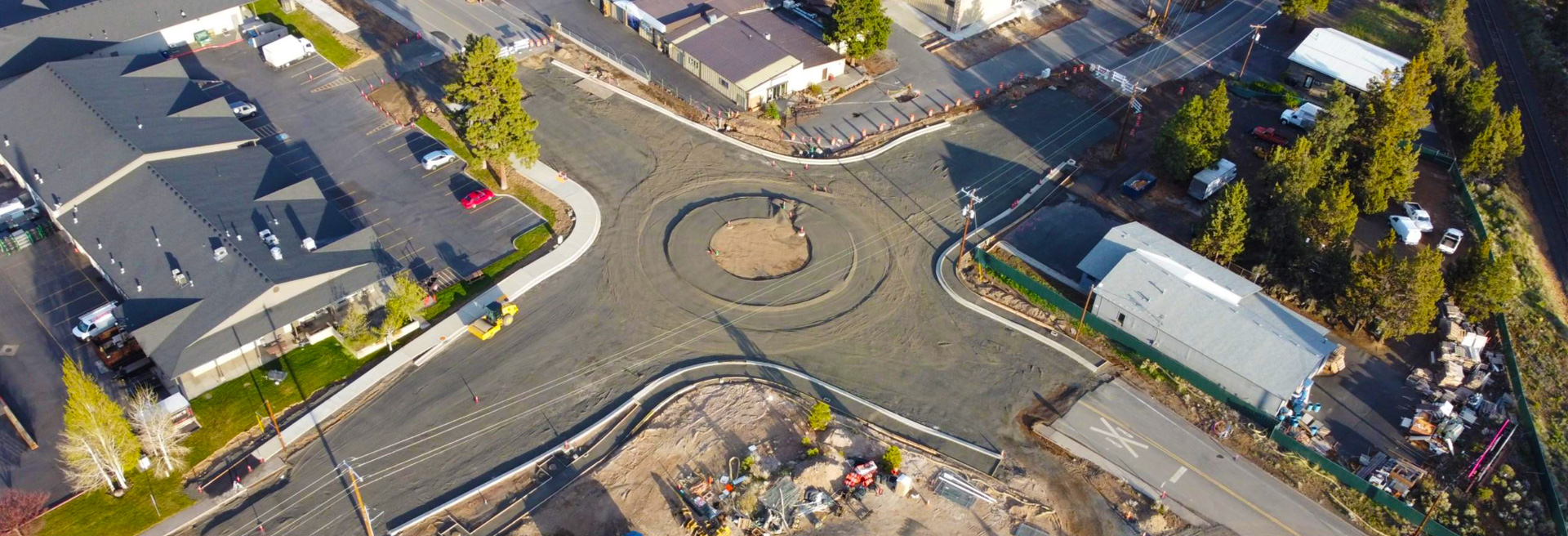
Our community has said that congestion and neighborhood safety are community priorities, and helped the City design the list of projects that voters ultimately approved.
Dashboard
To keep things transparent and accountable, the Transportation Bond Oversight Committee created the dashboard below. It gives you easy access to the latest GO Bond project updates. Further, it is updated with financial information every quarter.
The Transportation Bond Oversight Committee monitors, tracks, and reports to the community on project expenses, schedule, progress, and benchmarks.
Active Projects
City Council, after a two-year process with the Citywide Transportation Advisory Committee, identified these bond-funded projects. They focused on helping people who drive, ride bikes, and walk. The projects align closely with what our community said was important. Key priorities include Reed Market Road, US 97/Parkway, 3rd Street, east-west connections, and better pedestrian and bicycle access to schools, parks, and jobs.
Funding
The bonds will be repaid through an annual assessment of real property. This is estimated to cost property owners an average of 47 cents per $1,000 of assessed value each year during the repayment period. For example, the owner of a home with a real market value of $415,000 and an assessed value of $220,000 (the citywide average) would pay about $170 per year based on amounts from FY20. The bonds are structured so that property taxes won’t increase before 2022.
The City will issue bonds in multiple series over time to fund the proposed projects. The annual cost to property owners may be lower in the early years and higher later, once all the debt is issued. The City expects to issue the final bond series in 2030, with repayment completed by 2050.
Updates
Frequently Asked Questions
The bond funds will be repaid by local property taxes through an annual assessment of real property. The bonds will be issued in multiple series over time to provide funds on a staggered schedule. The measure will cost property owners an estimated average of $0.47 per $1,000 of assessed value each year during the repayment period. For example, a home with a real market value of $415,000 and an assessed value of $220,000 (Bend’s citywide average) is estimated to pay about $170 per year. The annual cost may be lower in the initial years and higher in later years when all the debt has been issued.
Bonds will be structured so that property taxes won’t increase before 2022. The annual estimated cost for the average homeowner is $30 in 2022 and $119 in 2024. Additionally, based on local economic conditions, the Oversight Committee can recommend that the City slow down spending to limit the impact on property taxes, which could delay the start of work.
The GO Bond measure will provide funds for proposed projects such as Reed Market Road, US 97/Parkway, 3rd Street, east-west connections, and pedestrian and bicycle access to schools. See the complete list of proposed projects below.
The projects were identified by Bend City Council after a two-year process with the Citywide Transportation Advisory Committee. They recommended projects that would assist people who drive, ride bikes, and walk. The projects represent the 0-to-10-year projects in the 20-year Transportation System Plan. See the proposed project list in the interactive map above, and the last FAQ.
A portion of the bond proceeds will be used as matching funds for local projects led by the state, such as along the U.S. 97/Parkway. In some instances, the City can also use bond funds for partnership projects with other agencies, such as ODOT, Cascades East Transit, and private developers. See the proposed project list in the interactive map above, and the last FAQ below, under “Parkway Connections.”
Work on the bond-funded projects will begin in 2021. Most of the projects will be completed in approximately 10 years, and some neighborhood and proposed intersection projects will start in the first year with design. The City Council chose projects that could be completed within this time period.
Yes. As part of the City’s Transportation System Plan (TSP) update, a subcommittee of the Citywide Transportation Advisory Committee, called the Funding Work Group, developed a plan to implement the projects and programs identified in the TSP. The GO bond is the first piece of the City’s 20-year funding strategy, which includes a number of funding sources to be evaluated in future years: increases to transportation system development charges, targeted sales taxes, urban renewal funding, fuel taxes, a transportation utility fee, promoting local improvement districts, and a county vehicle registration fee.
The City could implement other funding tools identified by the Funding Work Group, a subcommittee of the Citywide Transportation Advisory Committee, to implement projects in the 20-year Transportation System Plan, including those identified for funding through the proposed bond measure.
No, under Oregon law, GO bond proceeds can only be used for capital projects. This means bond funds can’t be used for ongoing road maintenance, snow removal, or similar activities.
Most federal and state transportation funds are earmarked for the federal and state highway system, not local roads. The federal government hasn’t increased the gas tax since 1993. The State of Oregon increased the gas tax in 2017, and a portion of that is shared with cities. State funding to Bend is used for street maintenance and improving the condition of existing roads.
In 2011, Bend voters approved a $30 million GO bond for transportation upgrades. This funded the construction of 12.7 lane miles of new pavement, 4 roundabouts, 5.6 miles of sidewalks, 181 ADA-compliant curb ramps, 59 LED streetlights, and storm drain improvements that reduced storm runoff into the Deschutes River by 94 percent. All bond-funded projects were completed on schedule using the voter-approved funds.
The City Council has adopted a resolution to establish a Bond Oversight Committee, made up of community members, to track and report to the community on project expenses, schedule, progress, and benchmarks.
The proposed 2020 GO Bond project list with details for each project can be found on our Dashboard: