Greenhouse Gas Emissions
Reducing greenhouse gas emissions is key to Bend’s goal of creating a cleaner, healthier, and more resilient future. By monitoring emissions and putting climate action strategies into place, the City is making strides toward building a more sustainable community.
Greenhouse gases like carbon dioxide (CO₂) and methane (CH₄) trap heat in the atmosphere, leading to climate change. Bend is already feeling the effects, such as more frequent wildfires, hotter summers, and less snowpack.
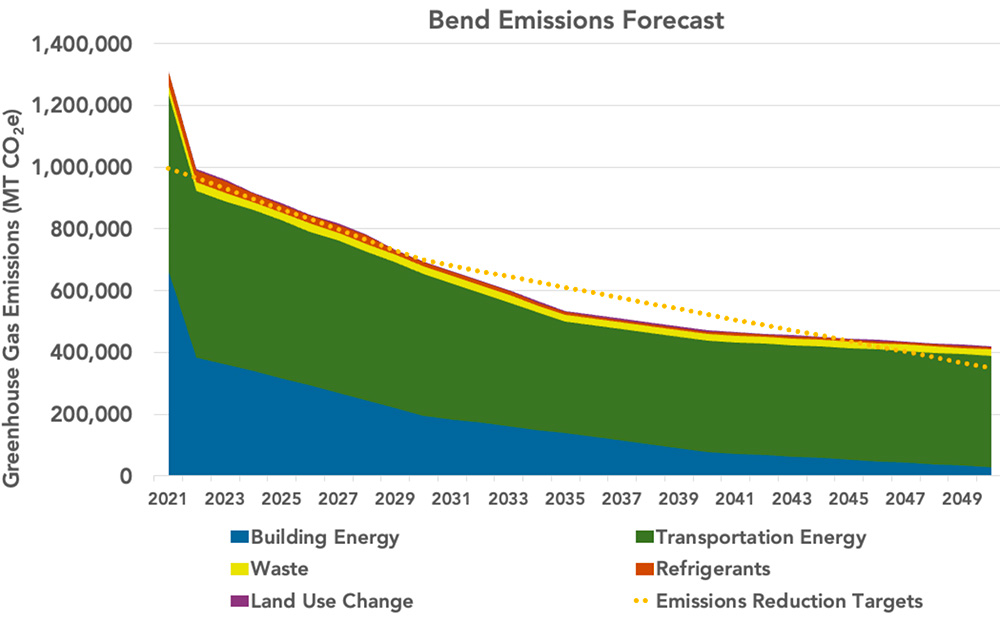
To tackle these challenges, the City Council approved an updated Community Climate Action Plan in 2019. This plan sets clear targets to reduce greenhouse gas emissions and move toward a more sustainable energy future. The goal is to cut fossil fuel use by 40% by 2030 and 70% by 2050, guiding both city-led initiatives and community-wide efforts.
Where Do Bend’s Emissions Come From?
Bend keeps track of its emissions through greenhouse gas inventories. These inventories help pinpoint the main sources of pollution and guide the city’s climate action efforts.
2021 Community Greenhouse Gas Inventory
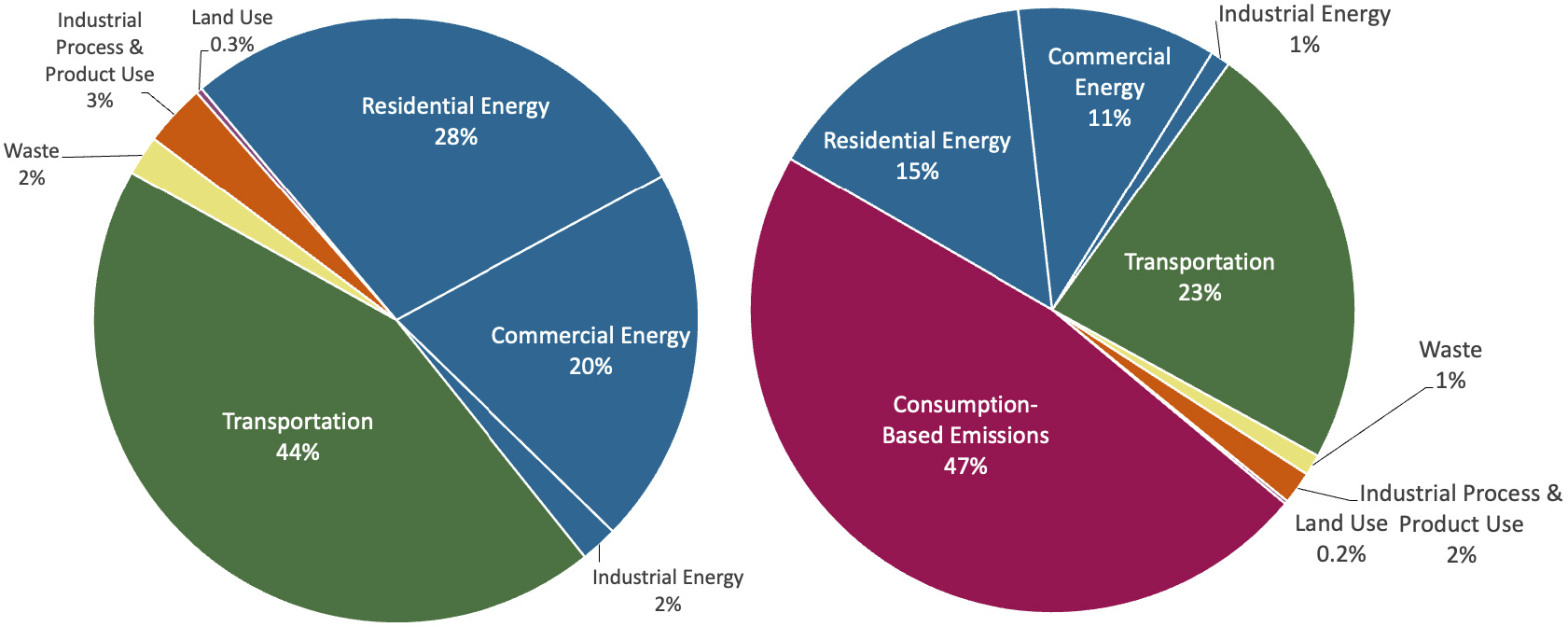
Bend’s 2021 Local Greenhouse Gas Emissions (left) and Local plus Imported Greenhouse Gas Emissions (right)
Key Sources of Local Greenhouse Gas Emissions
Below are the key sources of local greenhouse gas emissions in bend in 2021:
- Building Energy Use (50%): This is the largest source of emissions in Bend. Most of these emissions come from electricity (73%) and natural gas (24%) used in homes and businesses.
- Transportation (44%): Emissions mainly come from gasoline and diesel burned in personal vehicles and freight transportation.
- Refrigerants (3%): Leaks from cooling systems in buildings and vehicles release potent greenhouse gases.
- Waste & Land Use (Less than 3%): Emissions come from landfill waste, wastewater treatment, and land use changes like deforestation.
- Imported (consumption-based) Emissions (1.2 million metric tons of CO2 equivalent): The production of goods, food, and energy used in Bend but created elsewhere doubles the city’s total carbon footprint.
Understanding Local and Imported Emissions
Bend’s greenhouse gas inventory distinguishes between local and imported (consumption-based) emissions:
- Local emissions are generated within the city’s boundaries from activities like driving gas-powered cars, using electricity and natural gas in buildings, and managing waste.
- Imported, or consumption-based emissions come from the production, transportation, and disposal of goods, food, and energy consumed in Bend but made elsewhere. This includes emissions from air travel, consumer goods, and food production. These emissions are significant, nearly equal to all of Bend’s local emissions combined.
Tracking both local and imported emissions helps the city develop more comprehensive strategies to reduce Bend’s overall carbon footprint.
Bend 2021 Community Greenhouse Gas Emissions
Local Emissions with Household Consumption and Community Fuel Production
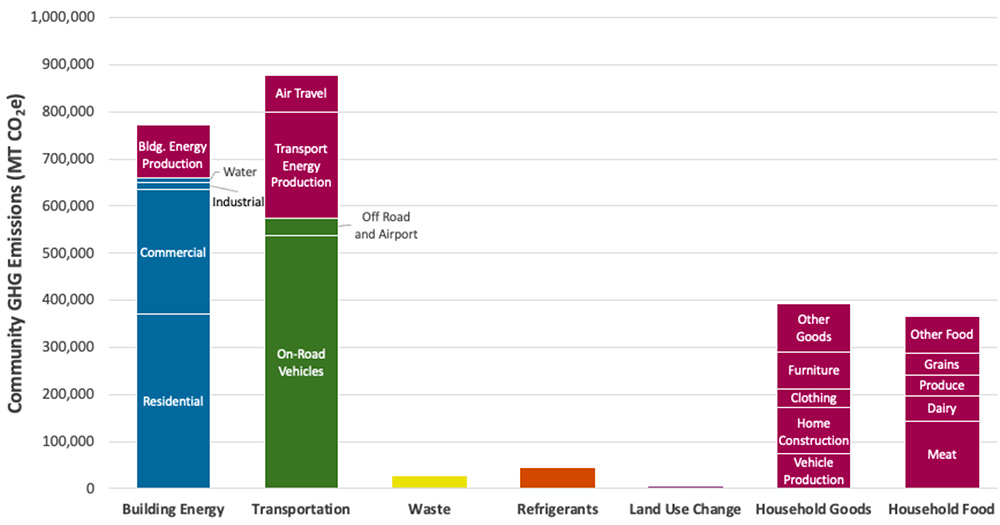
2021 Greenhouse Gas Inventory Highlights
- Local emissions: 1.3 million metric tons of carbon dioxide from buildings, transportation, waste, and land use.
- Imported emissions: 1.2 million metric tons of carbon dioxide from goods, food, and energy produced outside Bend but used locally.
- Total combined emissions: 2.5 million metric tons of carbon dioxide when we add both local and imported emissions together.
2016 vs. 2021: How Have Emissions Changed?
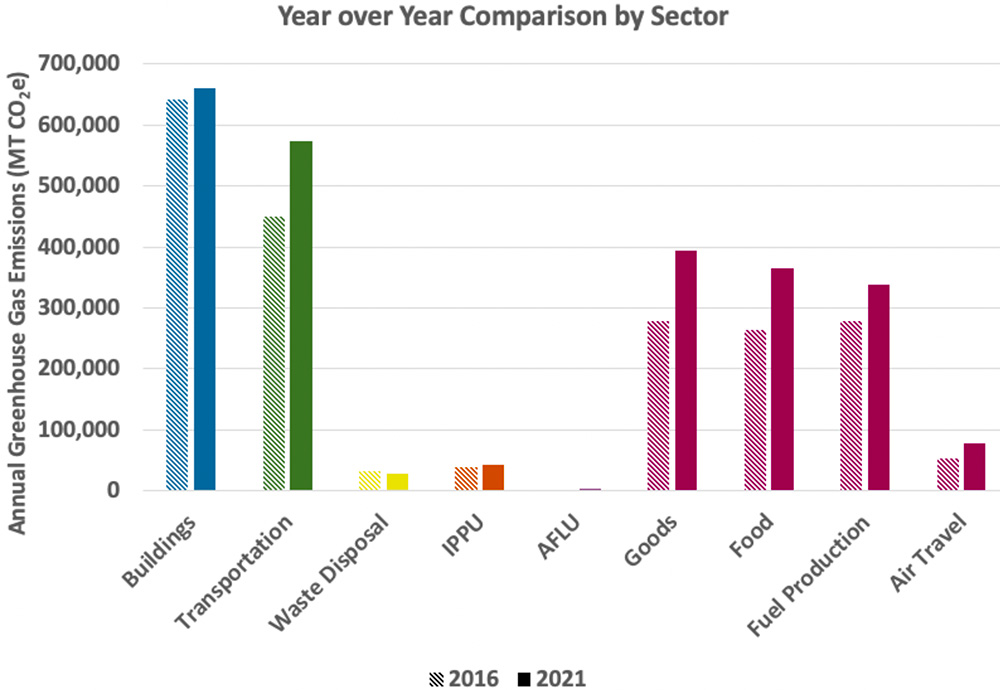
- Transportation emissions increased by 28%, from 449,307 to 574,586 metric tons of carbon dioxide, mainly due to more people living here and using more fuel.
- Emissions from building energy have slightly decreased, thanks to using more renewable energy and better efficiency programs.
- Overall emissions have stayed about the same, but with a growing population, the emissions per person are going down.
2016 Greenhouse Gas Inventory Comparison
What is a Metric Ton of Carbon Dioxide Equivalent (MT CO2e)?
The unit “CO2e” represents an amount of GHG whose atmospheric impact has been standardized to that of one unit mass of carbon dioxide (CO2), based on the global warming potential (GWP) of the gas (U.S EPA).
To help visualize emissions, one metric ton of carbon dioxide equivalent (MT CO2e) is equal to:
- Driving a gas-powered car for 2,500 miles (about 6 months for an average driver).
- Using 10% of a typical U.S. home’s energy for a year.
- Burning 40 propane cylinders for backyard BBQs.
- The amount of carbon 1.2 acres of forest absorbs in a year.
Tracking Progress & Future Goals
Bend’s climate policies are expected to reduce local emissions by 64% by 2050, compared to 2016 levels. However, additional efforts are needed to reach the City’s goal of a 70% reduction.
Learn more about Bend’s emissions:
Stay Connected
Sign up for Bend’s Sustainability Newsletter to receive updates on Community Climate Action Plan events, progress, and community opportunities.