Per – and Polyfluoroalkyl Substances (PFAS)
The City of Bend is committed to providing safe drinking water and is actively monitoring regulations about perfluoroalkyl and polyfluoroalkyl (PFAS) substances levels to ensure continued compliance with water quality standards and requirements.
The Water Services Department is committed to providing our water services customers with clean, safe, and dependable drinking water every day.
We’re keeping a close eye on new national rules about a group of chemicals called PFAS (short for perfluoroalkyl and polyfluoroalkyl substances), which can sometimes be found in drinking water. During testing, we found PFAS in one of our wells. As a precaution, we shut that well down right away, and it’s not part of our regular water supply. We’re continuing to test that well, along with our other eight water sources, to make sure everything stays up to standard.
Frequently Asked Questions
What are PFAS?
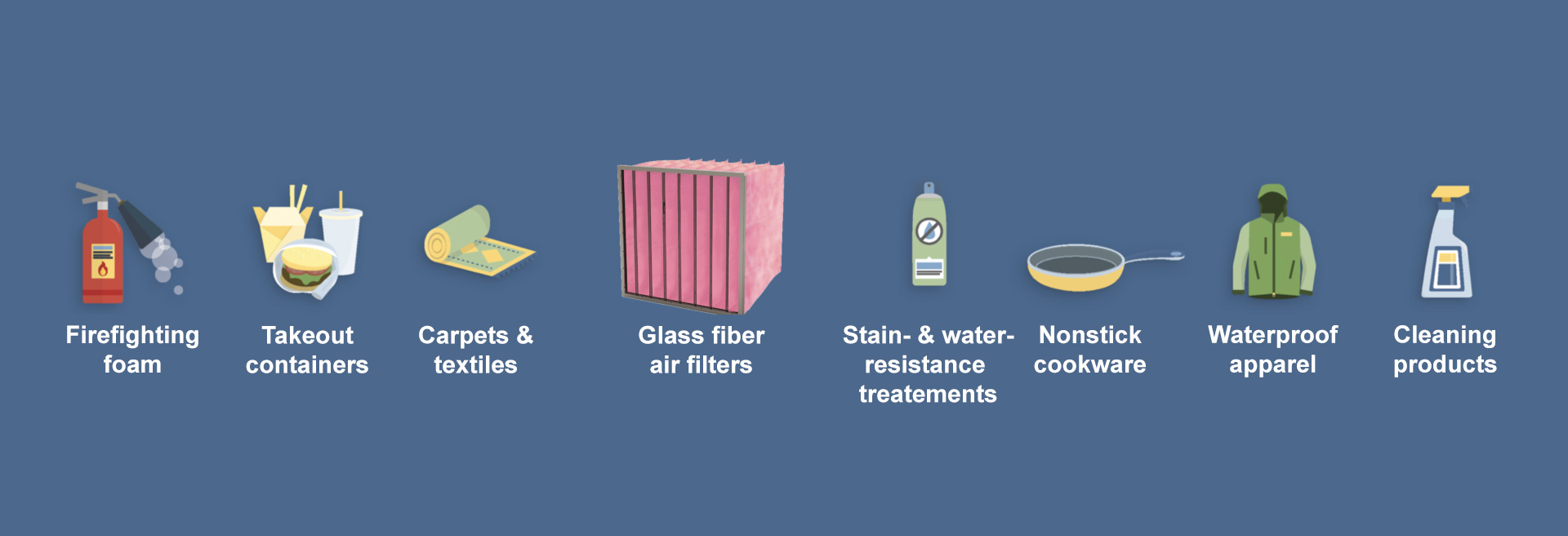
PFAS (short for perfluoroalkyl and polyfluoroalkyl substances) are a group of manufactured chemicals that have been used since the 1940s. You can find them in everyday items like nonstick pans (like Teflon™), stain-repellants (like Scotchgard™), and waterproof clothing (like GORE-TEX™). They’re also used in things like firefighting foam and electronics. One important thing to know is that PFAS don’t break down easily, so they can stay in the environment for a long time.
To learn more, visit the EPA’s PFAS page.
Has the Water Services Department found any PFAS in Bend’s Water?
Yes. In May 2023, the City of Bend tested its water for 29 types of PFAS. Out of nine water sources, eight—including the Bridge Creek surface water—had no detectable amounts of PFAS. However, one well, called Copperstone Well #1, showed tiny amounts of four PFAS chemicals. These levels were measured in parts per trillion (ppt).
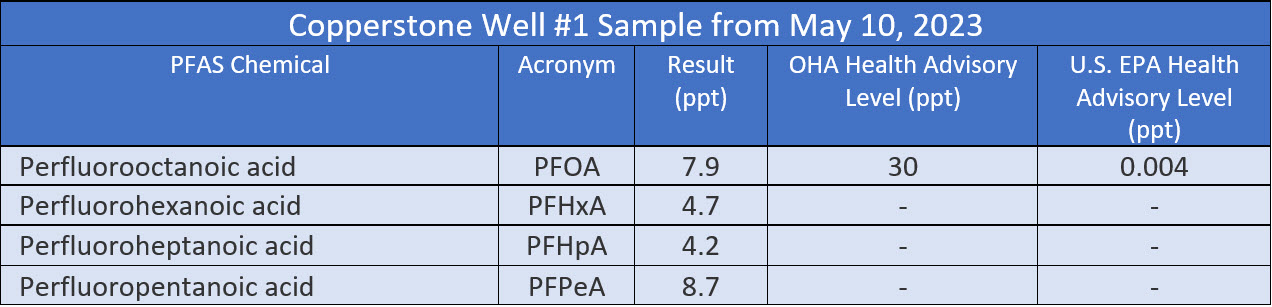
Follow-up tests at that well have shown mixed results—some tests found similar levels, while other samples found none.
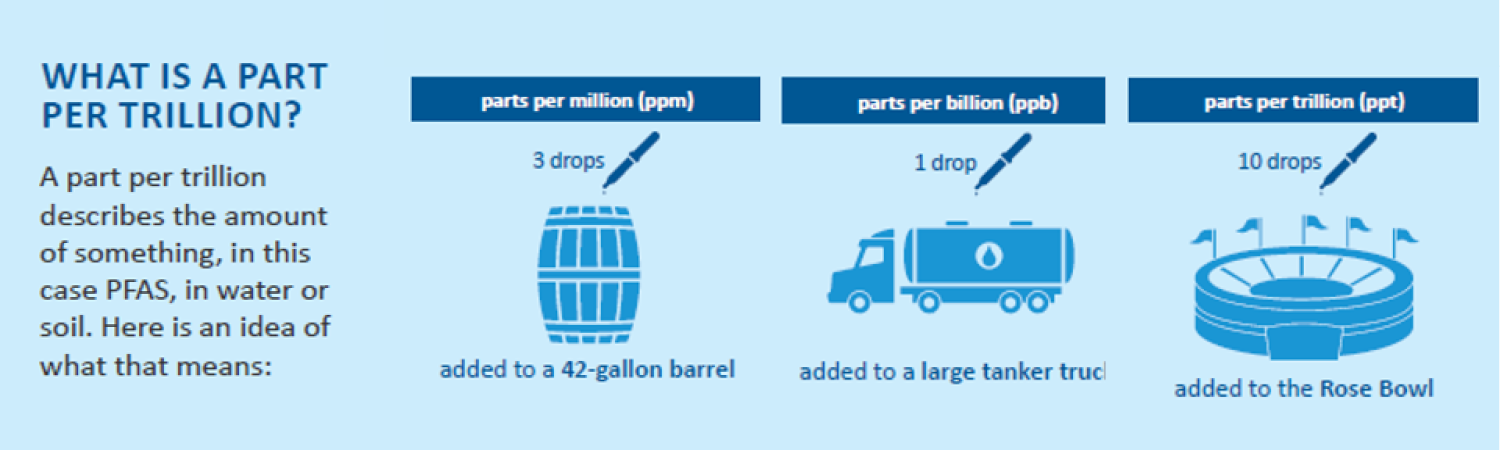
What is a Part Per Trillion?
A part per trillion is an exceedingly small amount—like one drop of water in 20 Olympic-sized swimming pools.
*From Water Research Foundation and American Water Works Association, 2022
What Is the City Doing About PFAS in Drinking Water?
As soon as PFAS were found, the City stopped using Copperstone Well #1 for drinking water. It’s only used now in cases of urgent need or for testing and monitoring.
The Bend Water Department is working closely with the Oregon Health Authority (OHA) and following all Environmental Protection Agency (EPA) guidelines. The Water Department is also participating in the EPA’s monitoring program to track PFAS in drinking water, called the “Unregulated Contaminant Monitoring Rule” (UCMR) program.
Learn more about Bend’s Water Quality and view our latest Annual Water Quality/Consumer Confidence Report:
Is the City Part of the PFAS Lawsuit?
Yes. Bend joined a class action lawsuit against 3M and DuPont, which made firefighting foams containing PFAS. The lawsuits claim that PFAS manufactured by these defendants contaminated public drinking water sources. 3M and DuPont have agreed to settle claims filed against them in these lawsuits in return for payments to impacted water systems. Participating in the settlements qualifies the City for payments to offset the costs of remediating its impacted drinking water sources if that becomes necessary.
Is My Tap Water Safe to Drink and Use?
Yes, it is. The EPA does not recommend switching to bottled water just because PFAS levels are above health advisory levels. Research shows that PFAS don’t easily enter the body through skin, and boiling water doesn’t remove them. Read more information from the EPA here.
Still, if you prefer, you can use a certified water filter or bottled water. Certified water filtration systems may lower levels of some PFAS if the filter is properly maintained. You can find more info on certified filters here.
How Are PFAS Regulated?
The EPA and Oregon Health Authority set the rules for how much PFAS can be in drinking water. Knowledge about PFAS and these rules governing PFAS have been changing quickly.
In April 2024, the EPA set legal limits (called Maximum Contaminant Levels or MCLs) for six PFAS chemicals. Water systems like Bend’s must:
- Complete initial monitoring for these PFAS by 2027, followed by ongoing compliance testing.
- Share results with the public beginning in 2027.
- Implement solutions that reduce PFAS by 2029, if levels exceed limits
What Can I Do to Reduce My Exposure to PFAS?
PFAS are in many everyday products. Here are some ways to lower your exposure:
- Choose products from companies that don’t use PFAS.
- Avoid nonstick cookware with PFAS—use stainless steel or cast iron instead.
- Replace worn-out nonstick pans.
- Check labels for ingredients like:
- PTFE (Polytetrafluoroethylene).
- Perfluorodecalin.
- Perfluorohexane.
- And others listed by health agencies.
The Oregon Association of Clean Water Agencies has helpful guides in English and Spanish about PFAS and how to reduce your exposure:
- Facts About PFAS exposure: an informational sheet with key facts about PFAS risks in English and in Spanish.
- PFAS: What You Can Do: to inspire individuals to reduce their PFAS exposure in English and in Spanish.