Flammable Vegetation
Everyone is responsible for clearing away flammable weeds, grass, vines, brush, and other plants from their property and adjacent public rights of way in the City of Bend.
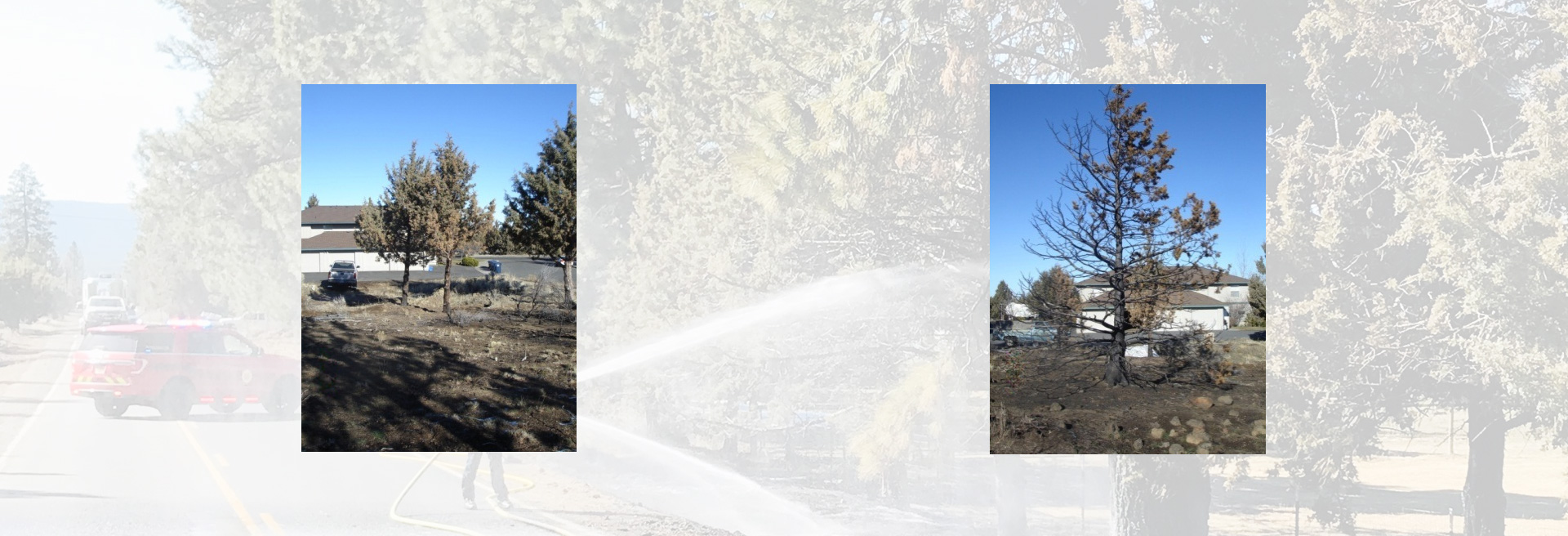
All tenants, property managers, and homeowners need to clear away flammable plants to help keep fires from spreading to nearby properties.
You can do this by cutting or removing vegetation as close to the ground as possible, or by using an EPA-approved herbicide. If there are flammable plants in the nearby right of way, it’s the property owner’s job to remove them.
Our Flammable Vegetation Code
- If your property is half an acre (21,780 square feet) or less, you must remove all flammable vegetation.
- If your property is larger than half an acre (21,780 square feet):
- Create and maintain a 20 ft. wide cleared area (fuel break) around the entire property, including any right of way or easements.
- Fuel breaks should be created along the property boundaries, all structures, trees, power poles, and vehicles.
- For more details, check the City’s Nuisance Ordinance on the Flammable Vegetation Code.
- For violations, the maximum penalty is $750 per day for each lot.
Make your Property More Wildfire Resistant
Our community and the surrounding regions have all experienced increased wildfire activity in recent years. As a result, our department is increasing proactive efforts to ensure all properties meet the City’s Flammable Vegetation Code standards. The goal of this code is to eliminate hazardous vegetation conditions that contribute to the spread of wildfire. Performing the tasks below will help make your home and community resilient to wildfire.
- Any tree limbs overhanging a structure (including outbuildings), or hanging within 10ft of structure eaves, should be cut back.
- All trees should be limbed up so branches are hanging no lower than 5-6ft from the ground (or limb up 1/3 of tree height for immature trees).
- All ladder fuels should be removed. Ladder fuels are any type of vegetation located within the drip line of a tree canopy.
- Any trees or shrubs located within the Immediate Zone (which is within 0-5ft of any structure on the property) should be cut back.
- All dead vegetation, including shrubs, trees, grasses or any other plant material, should be removed.
- Dense, dry grass should be cut and removed. Any noxious weeds growing on the property should be treated and removed.
- Accumulated layers of pine needles and cones should be removed.
- Properties over ½ acre in size should have an established 20ft fuel break around the perimeter.
- Additional work may be required for a specific property as directed by city staff.
Learn More About The Code
In the April 2025 episode of the City’s podcast “Let’s Talk Bend”, we talk to a community member about their perspective and questions they have about the letter.
You’ll also hear from our Director of Risk and Emergency Management Carrie Karl, Fire Inspector Melissa Steele and Code Enforcement Officer Julie Craig to explain the purpose of the letter and answer those common questions from the community.
Important Definitions
Flammable vegetation: Plants and vegetation that burn easily due to factors like dryness, flammable oils or the presence of dead material, potentially accelerating or intensifying a fire.
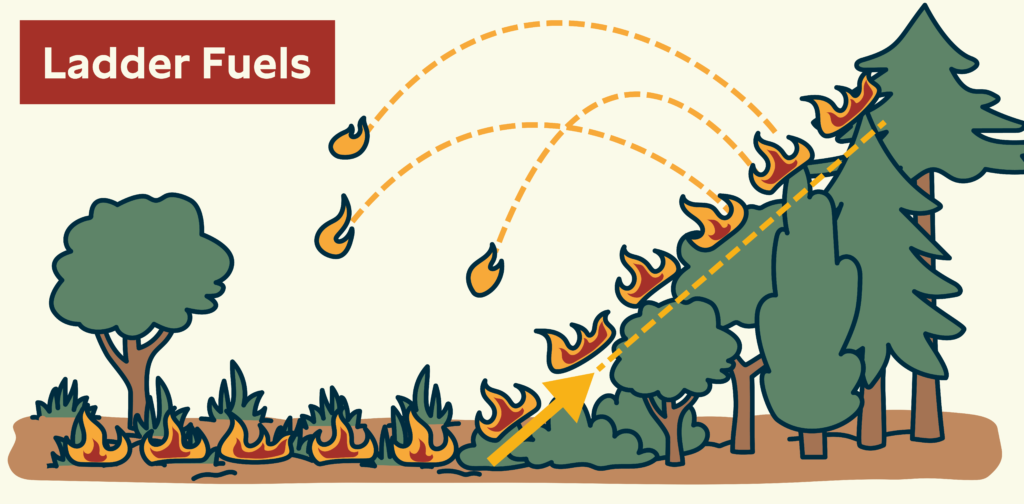
Ladder fuels: Vegetation (shrubs, grasses, pine needles and low-hanging branches) that allow a fire to climb from the ground into the tree canopy, facilitating rapid and extensive fire spread. Noxious weeds are a species of plant which is non-native, invasive and can be harmful to the environment and local ecosystems, and pose fire risk if not controlled.
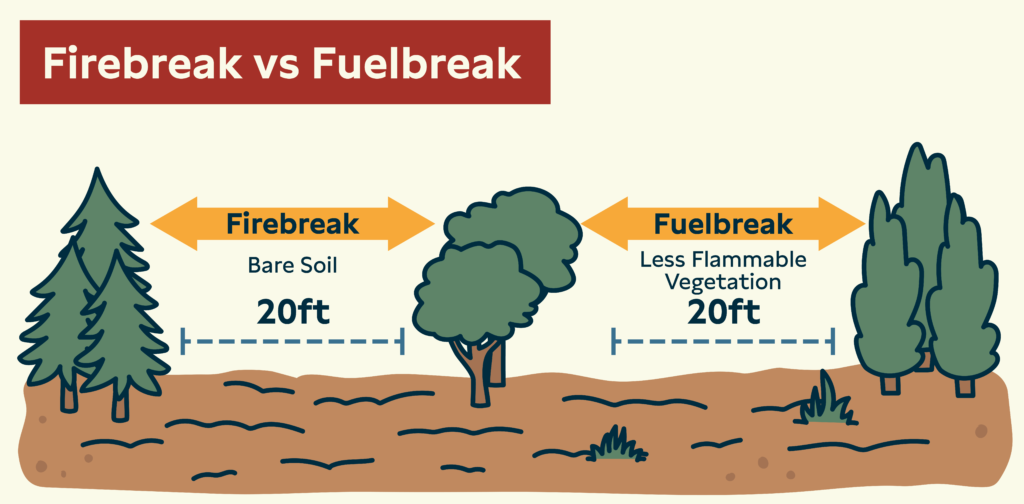
Fuel break: A strip of land where vegetation like brush, weeds and grasses have been reduced to control the spread of fire. This does not mean clear-cutting – fuel breaks can include a mix of live and low-flammability trees that are thinned and break continuity of fuel, or fire path. This graphic shows a 20-foot space between two sets of trees with bare soil in between, marked “Firebreak,” and another set of two trees 20 feet apart labeled “less flammable vegetation” and Fuelbreak.
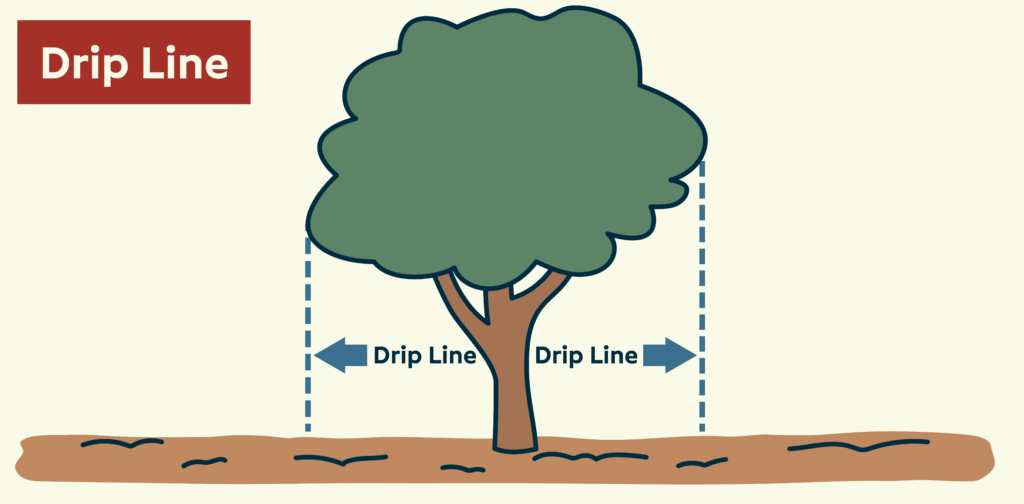
Drip line: The area defined by the outermost circumference of a tree canopy where water drips from and onto the ground.
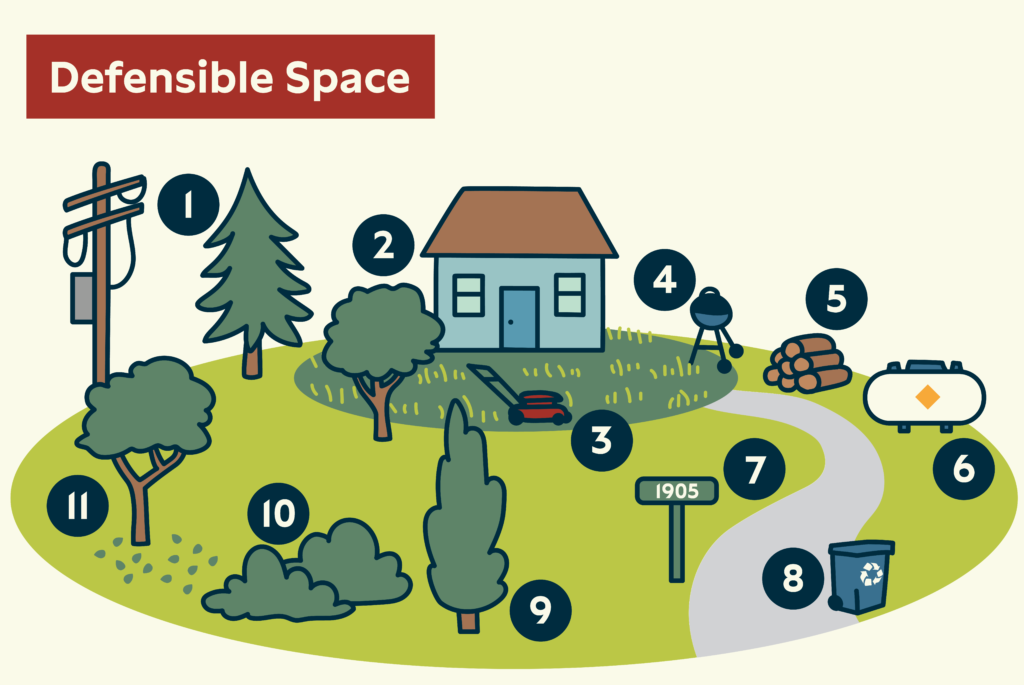
Defensible Space: Any area where combustible materials are treated, cleared or modified to slow and reduce intensity of wildfire and allow space for fire suppression operations to occur. Combustible materials are substances that burn or ignite such as wood or lumber, dead vegetation, plastics and fabrics (like found in lawn furniture and shade sails).
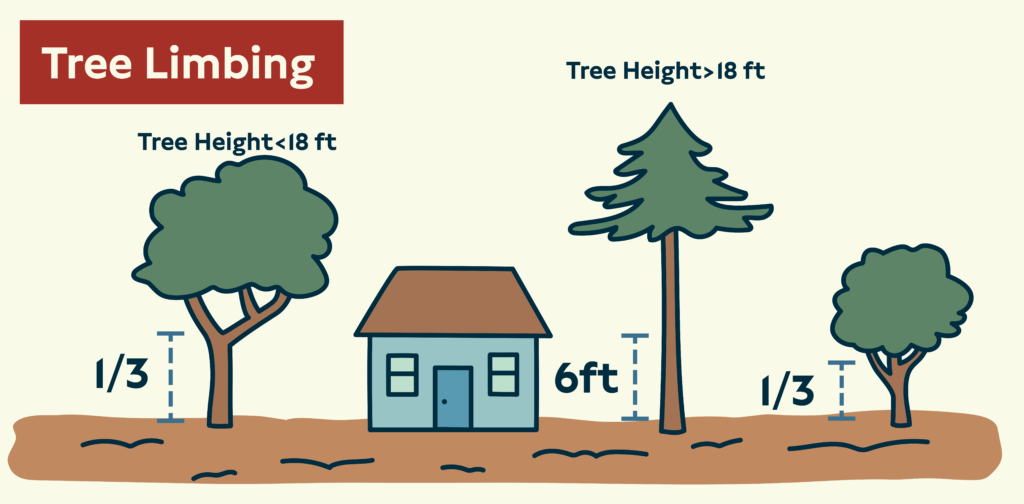
Tree Limbing: In the context of wildfires, limbing refers to the practice of removing lower branches from trees to reduce the risk of fire spreading from surface fuels to the tree canopy. In this graphic, a 6-foot measurement is lined up against a tree labeled “18 feet or taller.” Two other trees in the graphic are labeled to be under 18 feet, and are measured with a blue bracket with 1/3.
Frequently Asked Questions
Mandating State guidelines and industry best practices will increase our community’s resilience against wildfires. Bend is a dry, mixed conifer environment that is very prone to wildfire. Wildfire has devastated the Bend community in the past, and it is our shared community responsibility to maintain properties within city limits to minimize the destruction that could be caused by wildfire in the future.
Healthy plants are less likely to ignite than dry or dead vegetation, but all plants can burn under the right condition, and some are more flammable than others. We recommend that you maintain your landscape regularly and remove dead plant material, keeping your plants healthy, and that you create defensible space around your home by clearing vegetation abutting structures and using non-combustible materials like rock beds as opposed to bark or mulch. For more information on how you can harden your home against wildfire, visit bendoregon.gov/own-your-zone.
No. The expectation is that there are no limbs or vegetation located under the eaves of a home, or overhanging a structure, making it harder for fire to travel from vegetation to structures.
No. We ask that ground cover be maintained. This is done by removing dead materials such as pine needles and pinecones and removing woodchips and bark. We also recommend removing highly flammable ladder fuels such as bitter brush.
New developments that are identified as having higher fire risk during the planning process are held to a stricter development standard, such as building structures to be more fire resistant and requiring different landscaping than older, more traditional developments. For those in developments that are built with density, the expectation is that property owners maintain the vegetation within five feet of their home to the standards outlined in the code.
Most homeowner’s association standards are aligned with the City’s Flammable Vegetation Code. Some association standards are even more restrictive than the code, which is within their prerogative. We recommend that property owners follow the City code and bring any conflicting standards to their homeowner’s association board of directors for correction. We encourage homeowner’s associations to proactively respond to violations of the Flammable Vegetation Code within their communities, before filing a complaint with the City.
Firewise community requirements are less restrictive than the flammable vegetation code requirements. Code Enforcement has worked with many of these communities to reduce even more flammable vegetation, and they are often not the source of complaints submitted to Code Enforcement.
Code enforcement staff has already proactively inspected nearly 25% of all tax lots within the City limits over the last few years. These efforts will continue with the primary focus being on complaints submitted by community members. Staff will respond to complaints by first verifying that the property in question is not in compliance with the code, then they will reach out to the property owner and/or tenant in writing to make them aware of the code requirements and provide them an opportunity to come into compliance before any fines are issued. Voluntary compliance is the goal, and historically about 97% of code complaints are resolved without fines through community education and working with staff.
Yes. This code applies to all properties in the Bend city limits. Both organizations have historically been great partners with the City of Bend Code Enforcement staff to maintain their properties according to code.
No. Fuel breaks can include vegetation, including trees, that is maintained. This means that the limbs should be cut up to provide space between the ground and healthy vegetation, which can prevent fire from traveling upward into a tree canopy.
How to File a Flammable Vegetation Complaint
1Step: Prepare Your Details and Supporting Items
Before submitting your complaint, please gather the following information:
- Details of the Complaint: Describe the nature of the complaint and the alleged violation.
- Description of the Area: Provide a description of the area to help the inspector easily find the violations (e.g., front sidewalk).
- Location: Include the address of the violation.
- Supporting Items: Attach any supporting items with descriptions, such as photos or videos.
2Step: Submit Your Flammable Vegetation Complaint
- In the Online Permit Center Portal, start by selecting the Complaint Type
- Complete the rest of the form and submit the complaint
Helpful Links
- City Edition-Flammable Vegetation
- City Edition-Reducing Wildfire Fuels
- FireFree
- Fire Resistant Plant Information
Resource Directory
Arbor 1 Tree Service
- Chipping
- Ladder Fuel Reduction
- Hazard Tree Removal
- Slash
541-480-4223
arbor1.com
Aspen Landscape Development
- General Landscaping
541-330-9577
aspen-bend.com
Byrd Land Co.
- Chipping
- Ladder Fuel Reduction
- Mowing
- Hazard Tree Removal
- Slash
Phone: 503-407-2262
Central Oregon TreeXperts
- Chipping
- Ladder Fuel Reduction
- Hazard Tree Removal
- Mowing
541-480-9488
cotreexperts.com
DeClerk Property Services
- Chipping
- Ladder Fuel Reduction
- Mowing
- Hazard Tree Removal
- Slash
Phone: 541-350-0457
Fagen Tree Service
- Chipping
- Ladder Fuel Reduction
- Mowing
- Hazard Tree Removal
- Slash
541-382-4997
bendoregontreeservice.com
First Class Landscaping
- General Landscaping
541-815-4630
Liendo Landscaping
- Flammable vegetation
541-390-6099
liendolandscaping.com
Spar Tree LLC
Ladder fuel reduction
Hazard tree removal
(916)705-6664
TGX Clearland
- Chipping
- Ladder Fuel Reduction
- Slash
541-382-6136
Timber Stand Improvement
- Chipping
- Ladder Fuel reduction
- Hazard Tree Removal
- Slash
541-771-4825
www.timberstandimprovement.net
Yes! Tree Care
- Chipping
- Ladder Fuel Reduction
- Hazard Tree Removal
- Mowing
- Slash
541-668-3067
yestreecare.com

Customer Resources:
Monday through Friday
8 a.m. – 5 p.m.
Permit Inquiries:
Monday through Friday
9 a.m. – 4 p.m.
Closed most major holidays.

Location:
710 NW Wall Street
Bend, OR 97703