Resources for Immigrants, Migrants, and Refugees
Welcome to our comprehensive resource hub for immigrants, migrants, and refugees. Here, you’ll find information, support services, and community connections. Our resources are designed to empower and guide you.

We have witnessed and heard about the real fear people in our community are experiencing due to the federal administration’s brutal and inhumane approach to immigration enforcement. We have all seen with our own eyes the actions by federal immigration officers that are going on in Minnesota and throughout the country that violate the rights of citizens and immigrants alike.
The federal government has the ability to enforce federal immigration laws, but what we are seeing right now is not law enforcement. Instead, it is a campaign of terrorizing communities in a way that makes everyone less safe.
Federal immigration agents are ripping families apart, injuring and detaining legal observers, stopping citizens without cause, and using excessive and unnecessary lethal force. This cannot stand. Every single person in this country deserves to be free from unjustified and unconstitutional violence and violation of their rights, including their First Amendment rights.
As Mayor, I took an oath to uphold the constitution, as did all of my fellow City Councilors. I respect the law, and I respect and support our Bend police officers and their adherence to our high standards of conduct. The current paramilitary approach to immigration enforcement, in contrast, is only resulting in chaos and violence, and it is entirely unneeded in our cities. Immigrants make up a vital part of our city and our economy. Immigration in America is not a threat to be managed. It is a strength to be protected.
– Mayor Melanie Kebler
January 2026
Resolution No. 3467
A Resolution of the City Council supporting Bend’s immigrant communities and condemning the current federal government approach to immigration enforcement.
Relevant City of Bend Policies
Bias Crime and Incident Response and Investigation – Policy 318
The document outlines the Bend Police Department’s policy for responding to and investigating bias crimes and incidents. It defines bias crimes and incidents, provides guidelines for officers on how to handle such cases. The policy also mandates that victims be referred to appropriate local victim services and requires detailed documentation and reporting of bias-related incidents.
Limited English Proficiency Services – Policy 330
The document outlines the Bend Police Department’s policy for providing services to individuals with limited English proficiency (LEP). It emphasizes the importance of ensuring meaningful access to law enforcement services without discrimination. The policy includes guidelines for using qualified bilingual members and authorized interpreters, as well as procedures for handling various law enforcement situations involving LEP individuals.
For information about the Citywide Language Access Program for language services in departments additionally to Bend Police, visit: Language Access.
Bias-Based Policing – Policy 401
The document outlines the Bend Police Department’s policy on bias-based policing, emphasizing the commitment to fair and objective law enforcement without discrimination. It defines bias-based policing and improper profiling and strictly prohibits such practices. The policy includes guidelines for officers to ensure they can articulate the reasons for their actions and requires supervisors to monitor compliance and handle complaints.
Arrest or Detention of Foreign Nationals – Policy 411
The document outlines the Bend Police Department’s policy on the arrest or detention of foreign nationals, emphasizing adherence to the Vienna Convention on Consular Relations. It details the levels of immunity afforded to foreign nationals, including diplomatic agents, consular officers, and honorary consuls, and the appropriate procedures for handling enforcement actions involving these individuals. The policy mandates that officers verify claims of immunity and follow specific protocols for identification, documentation, and notification of consulates. Additionally, it provides guidelines for handling traffic collisions and other incidents involving foreign nationals, ensuring compliance with international obligations and respect for diplomatic relations.
Contact with members of immigrant communities and enforcement prohibitions of federal immigration laws – Policy 413
The document outlines the Bend Police Department’s policy on interactions with immigrant communities and enforcement prohibitions of federal immigration laws. It emphasizes that officers should not inquire about, detain, or arrest individuals solely based on their immigration status and prohibits the use of department resources for enforcing federal immigration laws. The policy also details the procedures for handling requests from federal immigration officials and the importance of treating all community members with respect and dignity. Additionally, it includes guidelines for assisting victims and witnesses with U visa and T visa applications and mandates reporting and record-keeping for consular notifications and visa certifications.
Prohibition on Use of City Facilities for Immigration Enforcement – Policy CF-0003
This document outlines the City of Bend’s policy on the use of City facilities for certain civil immigration activities. It defines Civil Immigration Enforcement Activities, City Property, and Areas Not Open to the Public. The policy provides direction about the how State law applies to City-owned property and facilities, and clearly states that City Property may not be used for Civil Immigration Enforcement Activities. This policy does not apply to public streets or sidewalks, and does not prevent immigration enforcement activities from happening within the city of Bend or in public spaces without use of City resources.
NOTE: The pdf files of these policies are applicable as of the date this page went live. For the most up-to-date policy language please visit here.
*These policy summaries were prepared with the assistance of AI.
Local Resources
- Immigration and Advocacy at Latino Community Association
- OSU-Cascades Undocumented Student Information
- COCC Undocumented Student Resources
- Bend La Pine School District Resolution No. 1982: Resolution to Affirm Rights of Undocumented Students and Protocols for Immigration and Customs Enforcement (ICE) Access to Schools
Frequently Asked Questions
Since 1987, Oregon has had laws in place limiting the ways that state and local law enforcement can be involved in immigration enforcement. Oregon was the first state in the United States to have such laws in place. The laws were updated and expanded in 2021 with the Sanctuary Promise Act. These laws include ORS 180.805 and ORS 181A.820 to 181A.838. Under these laws, local law enforcement is prohibited from detaining people or using law enforcement resources or facilities for the purpose of enforcing federal immigration laws. The law says local agencies may not inquire about or request information concerning a person’s citizenship or immigration status, unless required by law or to determine eligibility for a benefit and may not share any information collected unless required by law. Local law enforcement also cannot treat people in custody differently based on known or suspected immigration status or federal immigration requests or civil warrants. Local agencies, including Bend Police, cannot ask about a person’s immigration status or country of origin except in certain circumstances.
Local funds, equipment and personnel cannot be used for the purpose of enforcing federal immigration law. Local funds may not be used to detect or apprehend persons, provide information, investigate or interrogate individuals, or establish traffic perimeters for the purpose of supporting or facilitating immigration enforcement. It does allow local law enforcement to request information from immigration officials relating to local criminal investigations. Local law enforcement may arrest individuals who are charged with criminal immigration violations and have a federal warrant issued for their arrest.
If a local government receives a request from a federal immigration authority for information, it must report that request to the Oregon Criminal Justice Commission.
Any person may sue a local agency in civil court for violating these laws.
The law also creates a Sanctuary Promise reporting hotline and website, where any person can report violations of the laws. The hotline number is 1-844-924-STAY (1-844-924-7829)
Spanish Direct Line: 1-844-626-AMPARO (1-844-626-7276), and the website is sanctuarypromise.oregon.gov and promesaSantuario.oregon.gov.
A local law enforcement agency can arrest a person who has a judicial arrest warrant, including persons who may also be present in violation of federal immigration laws. Judicial warrants are based on probable cause and are different from the administrative warrants often used by federal immigration authorities pursuing immigration violations.
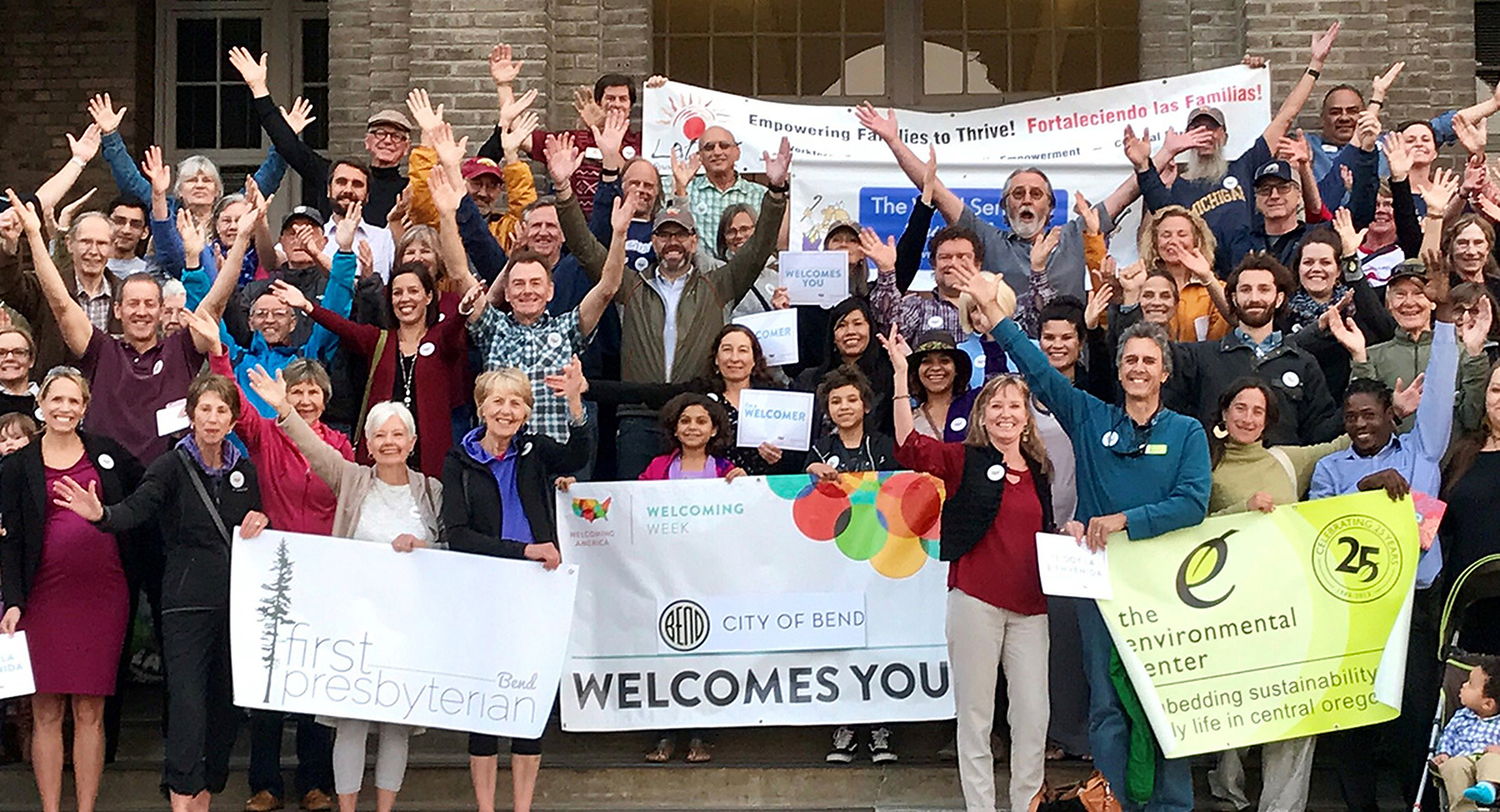
Bend is a Welcoming City that embraces and celebrates its immigrant and refugee community members. As a Welcoming City, we are a member of the Welcoming America network.
According to Welcoming America, there is no legal definition of a “Sanctuary City.” It is a political term. A commonality among cities that have adopted sanctuary-type policies is policies or laws that limit the extent to which local law enforcement will assist the federal government on immigration matters, and that bar local police from asking for proof of citizenship and arresting immigrants who lack documentation unless they are suspected of committing other criminal offenses. In Oregon, cities are already subject to and work within these concepts, which are already enshrined in state law. Oregon is sometimes considered a “Sanctuary State” due to ORS 181A.820. While the statute does not use the term “sanctuary,” its restrictions on using law enforcement resources to detect and apprehend individuals for immigration violations are common elements of local and state “sanctuary” declarations or policies.
We want everyone to feel welcome and safe and will put that outcome at the center of our decision making and actions. Our engagement efforts will amplify the voices of historically excluded populations and work to ensure all groups have a seat at the table. We will strive for a Bend where everyone has a voice in decision making that leads to shared prosperity.
When Bend became a Welcoming City in 2017, we reaffirmed our alignment with Oregon state law by refraining from using City funds, personnel and equipment from enforcing federal immigration laws and detaining people solely on their immigration status. You can read the Welcoming City resolution here.
We want everyone to feel welcome and safe and will put that outcome at the center of our decision making and actions. Our engagement efforts will amplify the voices of historically excluded populations and work to ensure all groups have a seat at the table. We will strive for a Bend where everyone has a voice in decision making that leads to shared prosperity.
When Bend became a Welcoming City in 2017, we reaffirmed our alignment with Oregon state law by refraining from using City funds, personnel and equipment from enforcing federal immigration laws and detaining people solely on their immigration status.
Cities cannot actually shield anyone from deportation or prevent the federal government from enforcing immigration laws within their jurisdictions. Read more here: Southern Poverty Law Center article and America’s Voice article.